
“Playing Up” in youth football refers to a situation where a player competes in a higher age group than their chronological age. This can happen for various reasons, such as the player being really good or physical development.
Playing up allows talented youth players to face more challenging competition, which can aid in their overall development.
Coaches may consider this option if they believe the player will benefit from the increased challenges and opportunities for growth in an older age category.
The Benefits and Challenges of Playing Up in Youth Football:
“He’s just too big to be playing against us.” It’s a familiar refrain among coaches and parents in youth football.
We’ve all seen that child: the one taking on multiple players a time, the one unleashing hard shots from impossible angles, the one leaving opponents in a twist.
It’s no wonder the question arises: should we let him play up?
Playing up, means bumping a talented young footballer up to a higher age group. It’s a decision with big implications, both positive and negative, and weighing them carefully is crucial before making the call.
Benefits of Playing Up:
Higher Competition: Facing older, physically stronger players can push a young talent to new heights.
They’ll have to refine their skills, improve their decision-making, and develop tougher mental resilience to compete.
Quicker Development: Being surrounded by players with more experience can accelerate learning and tactical awareness.
The higher level of coaching in older age groups also contributes to quicker skill development.
Boosted Confidence: Rising to the challenge and excelling against older players can significantly boost a young athlete’s confidence and self-belief.
This can have a positive effect, further awakening their passion for the game.



Challenges of Playing Up:
Physical Disparity: The size and strength difference between age groups can be significant, especially in early teenage years. This can lead to increased injury risk and frustration for the younger player.
Social and Emotional Impact: Fitting in with older teammates and adjusting to a new social dynamic can be tough. There’s a risk of the player feeling isolated or overwhelmed, leading to demotivation.
Overtraining and Burnout: The increased intensity and demand in older age groups can lead to overtraining and burnout if not managed carefully.
Striking the right balance between challenge and rest is key.
It’s not unusual for academy players in the U16 and U18 teams to share the same venue.
In such cases, it’s common to observe a player who has participated in a portion or more of a U16 match swiftly transferred to another field to join the U18 game.
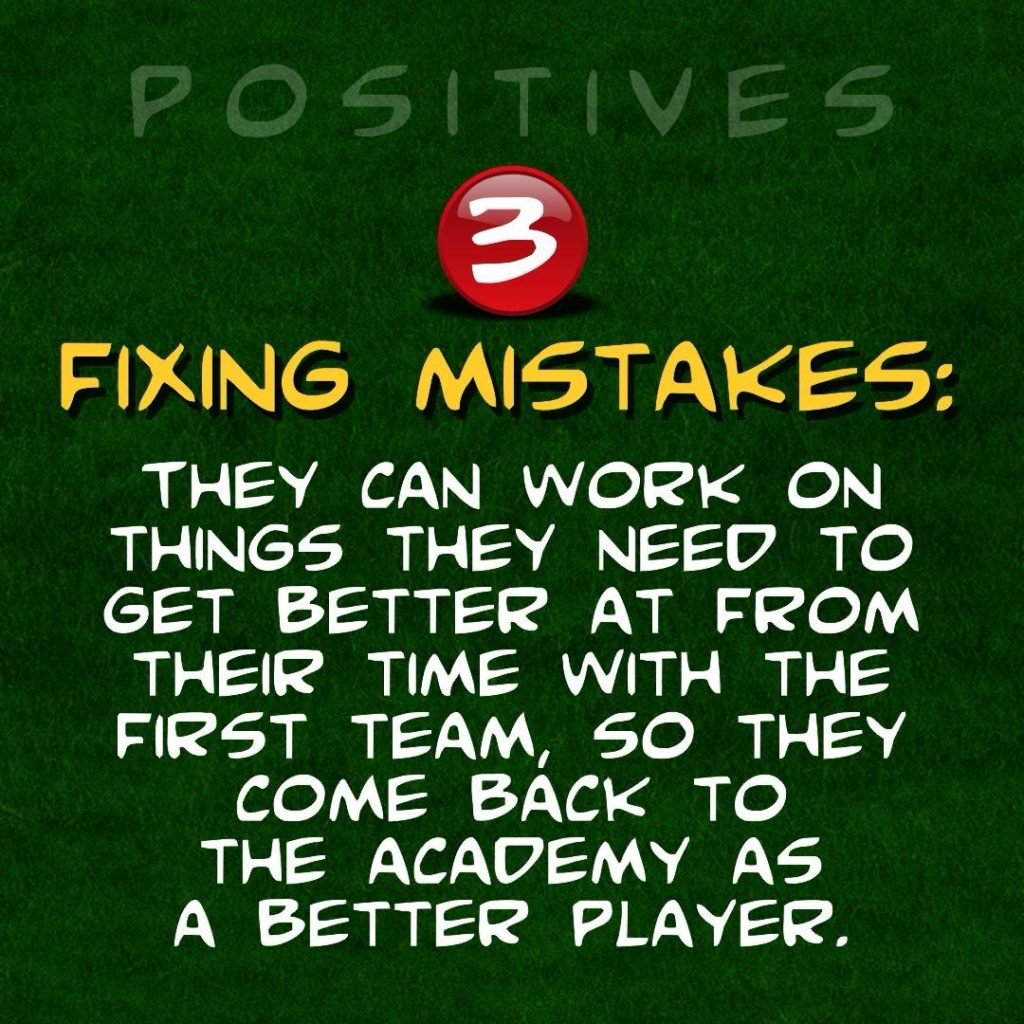
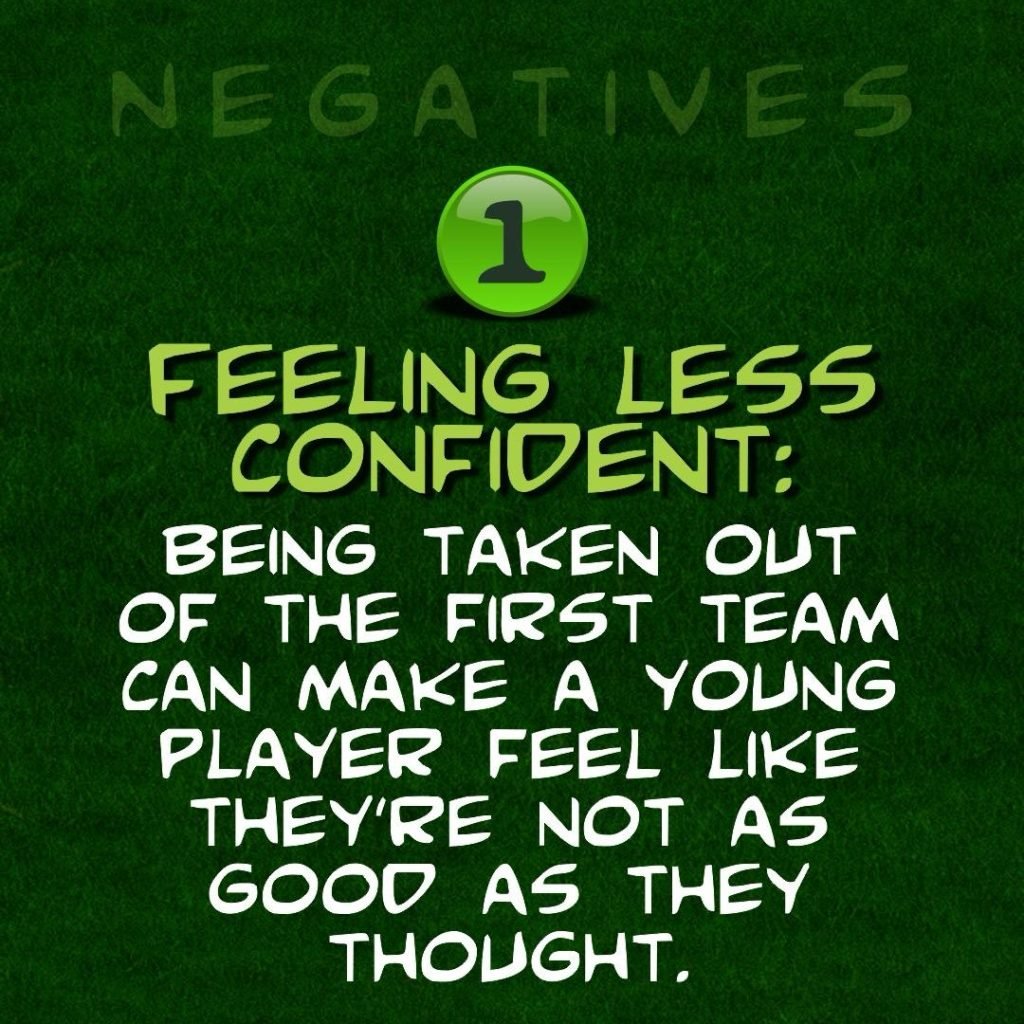
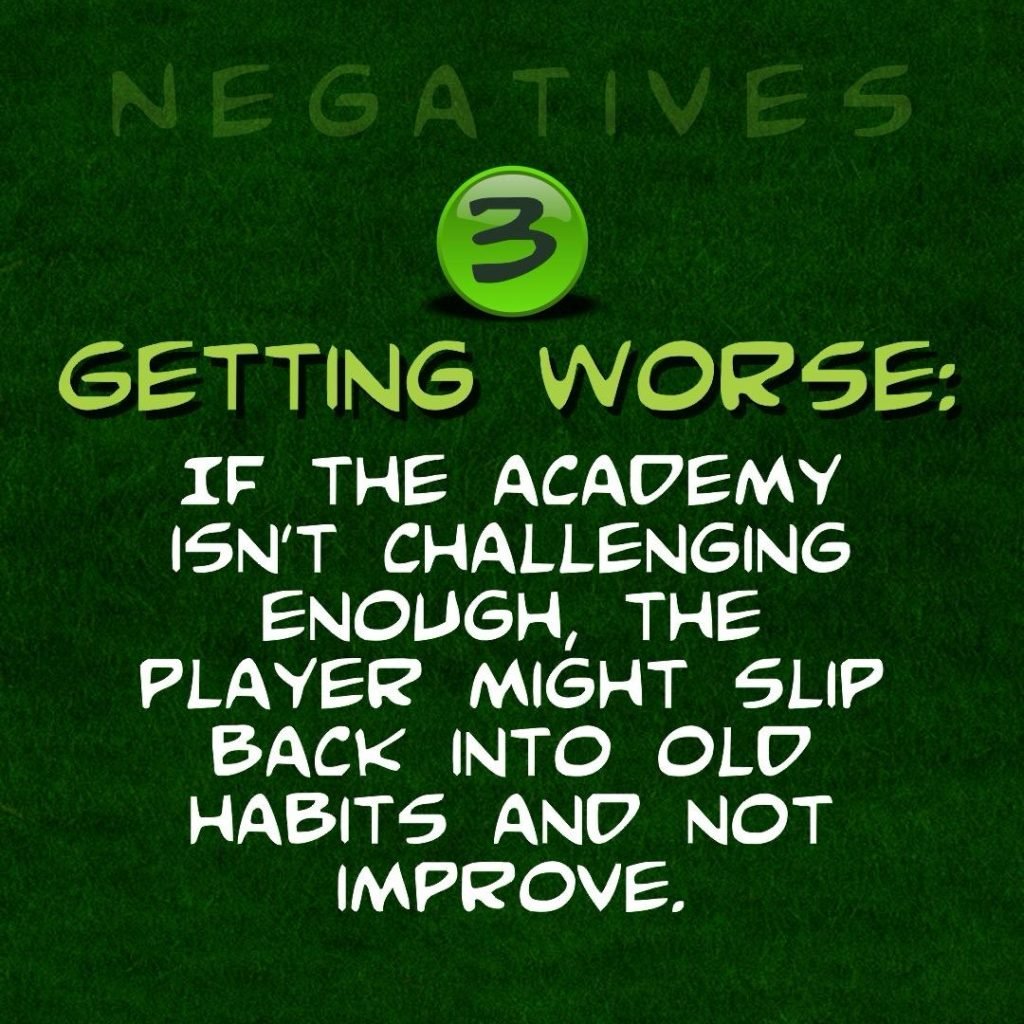
A youth player going back to the academy after playing with the first team can have negative consequences.


Known examples of players who have played up:
Mason Mount of Chelsea began his football journey in the U-9 team at the age of six, showcasing remarkable technical skills and vision that caught the attention of coaches.
His consistent progress led to frequent promotions through various age groups, and at the young age of 15, he even assumed the captaincy of the U-18 team.
Wayne Rooney, associated with Everton, displayed exceptional talent from an early stage. Joining Everton’s academy at nine, he quickly found himself competing against older players.
At just 16 years old, he was already making notable appearances for the senior Everton team.
Phil Foden, associated with Manchester City, became a part of the club’s academy at the tender age of four. His intellect, passing prowess, and creative skills swiftly caught the eye of coaches.
Within a few years, he found himself regularly competing against older players. Remarkably, by the age of 17, Foden was already making appearances for the senior team at Manchester City.
A Parents Perspective:
Feeling joy is normal when your child gets selected to play up, and it’s understandable to feel disappointment if another child is chosen instead.
Here are potential results that may arise if your son is chosen to play up, while theirs is not.
Positive reactions:
Genuine Support: Some parents will be genuinely happy for your son and congratulate him on his achievement.
They might see it as a testament to his talent and hard work and acknowledge him earning this opportunity.
Understanding: Others might understand the selection process and acknowledge that your son simply demonstrated the skills and abilities needed for the higher age group.
They might even feel motivated to encourage their own children to work harder and improve their skills.
Pride in the Team: Some parents might see your son’s selection as a good thing for the overall team, bringing in fresh talent and potentially boosting their performance.
They might be excited about the team’s prospects and what your son can contribute.
Negative reactions:
Disappointment: It’s possible some parents might feel disappointed, especially if they had hoped their own children would be considered for the higher age group.
This could lead to feelings of envy or even resentment towards your son.
Questioning Selection: Some might question the coach’s decision and feel it’s unfair or biased. They might voice their concerns openly or even make passive-aggressive remarks.
Competitive Pressure: Parents, particularly those with highly competitive ambitions for their children, might see your son’s selection as a threat to their own children’s chances of success.
Final Thoughts:
In the end, the choice to move a player up should be determined individually, taking into account factors such as the player’s physical and mental maturity, skill level, and personality.
A thorough evaluation by coaches, parents, and possibly sports psychologists can be extremely helpful in making the correct decision.
It’s important to note that there isn’t a universal solution. Playing up may greatly benefit some young talents, but for others, it might impede their growth and enjoyment of the game.
Always prioritize the player’s long-term well-being and happiness as the foremost concern.