
Football is evolving, with more young talent emerging as stars. This trend reflects significant changes in their development.
Here’s why many young talents are rising to the top in men’s football.
Improved Youth Development Programme
The Elite Player Performance Plan (EPPP) has significantly improved player development in UK academies.
Top English clubs especially those with category 1 academies have excellent facilities to train young talent, preparing them for high-level competition early on.
Players like Reece James (Chelsea), Cole Palmer, and Phil Foden (Manchester City) have benefited from these elite programs.
More recently, Oscar Bobb (Manchester City), Colwill Livramento (Chelsea) and Jarrell Quansah (Liverpool) have bust into the limelight.
Early Professional Experience
By clubs giving young players more opportunities to play in first team matches, they can learn quickly and become better players.
The Euro 2024 tournament showed the importance of using young players in games, with players like Lamine Yamal (Barcelona and Spain), Kobbie Mainoo (Manchester United and England) excelling for their countries.
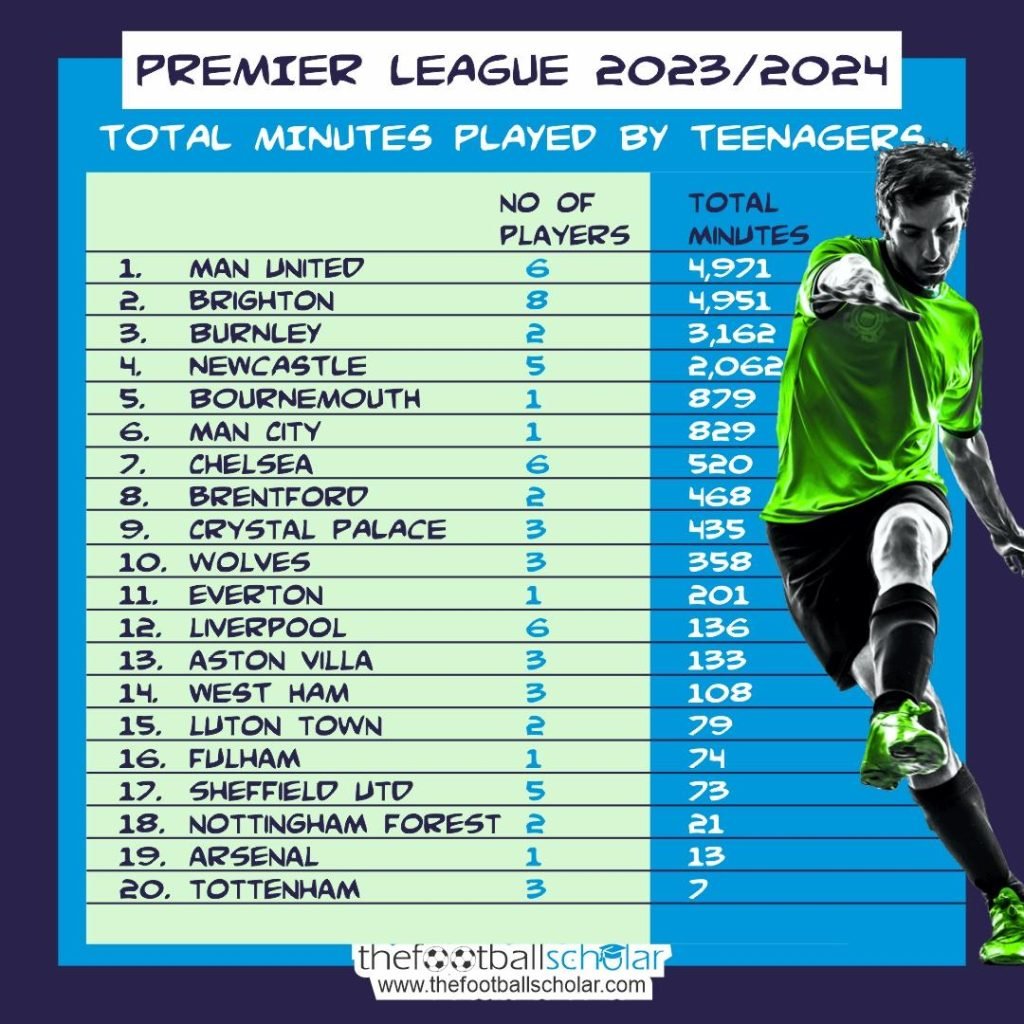
Lewis Miley aged 18 years played 17 matches for Newcastle United during the 2023/24 season.
Physical and Mental Readiness
Advancements in sports science and nutrition help young players handle the demands of professional football, along with mental support to manage pressure.
Young footballers often have exceptional natural ability and athleticism, bringing a fresh dynamic to a team.
In addition, their versatility and adaptability make them valuable assets in different formations.
Eduardo Camavinga started playing for Rennes at 16 and now shines at Real Madrid, showing great physical and mental strength.
Warren Zaire Emery PSG starts for PSG at 17 whilst Kendry Paez is a starter for the national team at 16 Ecuador.
Modern Scouting Techniques
Club scouts and data analysts now use data and reports to identify young talents early, allowing promising players to join top clubs sooner and receive the best training.
With technology advancements and various recruitment tools, clubs can reach talent worldwide without the need to travel.
Brighton has become a model club for smaller teams. They find lesser-known players from abroad, develop them, and sell them for huge fees.
Chelsea’s scouting took them all the way to Brazil and Argentina to bring back exciting young talents like Estevao Willian from Palmeiras and Aaron Anselmino from Boca Juniors.
Tottenham signing of 18 years old Swedish midfielder Luas Bergvall from Djurgarden who has impressed in preseason for them.
Financial Strategies and Club Goals
Clubs seek young, affordable talent to develop into stars. These players can become valuable assets on the field and in the transfer market.
Barcelona relied heavily on young players when they were plagued with injuries and financial issues.
Pau Cubarsi aged 17, Alejandro Balde aged 20, Hector Fort aged 18 Gavi aged 20 and Marc Guiu aged 18 now at Chelsea all benefitted from this period.
Vinicius Junior and Rodrygo were bought for under 80 million pounds combined and are now valued at over 100 million each, showing that this strategy works for long-term investment.
Some clubs are known to be “selling clubs” and as such tend to give young players more opportunities to play men’s football.
Brighton is known to seek out young payers with potential and then sell them on to bigger clubs.
Moises Caicedo was bought for €28.20 million in 2020/21 and sold on to Chelsea in the 2023/24 season for €116 million.
Peterborough in League 1 sold one of their young players, Ronnie Edwards to Southampton in the Premier League for €3.50 million in 2024.
Clubs coping with increased games schedule
Due to the number of games in a season, more academy players are involved to prevent burnout or injuries to senior players.
International tournaments and local competitions like the Bristol Street Motors Trophy, FA Cup, and Carabao Cup necessitate playing young footballers.
This helps to reduce the playing time of some senior players.
Role Models and Inspiration
Young footballer’s success stories inspire other youngsters to follow their dreams.
Seeing their peers succeed makes young players believe they can achieve great things too.
Kobbie Mainoo’s quick rise at Manchester United inspired many young players. He debuted at 17 and became a key player for his club and country.
Other examples are Bukayo Saka breaking through at Arsenal and Reece James being captain at Chelsea.

Downsides of Playing Teenagers in High-Level Men’s Football
While it’s exciting to see young talent in top-level football, there are some drawbacks to having teenagers play in high-level men’s competitions.
Physical Immaturity
Teenagers often don’t have the same strength, power, and endurance as seasoned professionals.
This can make them more prone to injuries or less effective on the field.
Rico Lewis when he was inverted in midfield before he was later dropped for John Stones at Manchester City.
Also, Willy Kambawla whilst he was at Manchester United especially the game he played against Bournemouth.
Mental Pressure
The pressure on young footballers in high-level football can be intense and can hurt their confidence and development.
They face constant scrutiny and high expectations from the press and social media, which can be overwhelming.
Rasmus Hojlund went 14 games without a Premier League goal for Manchester United after joining from Atalanta for £72 million.
He admitted that he was bothered by the criticism he received.
Increased Injury Risk
High-level men’s football is physically intense, raising the risk of injuries for young footballers.
Their bodies are still developing, and they might not be physically ready for such challenges.
Recent ACL injuries among young players highlight this risk.
Pedri of Barcelona has been unfortunate with numerous hamstring injuries.
There is a school of thought that believes some of the injuries are due to overplaying young players
In conclusion, while there are benefits to playing teenagers in high-level men’s football, it’s important to consider the potential downsides.
A well-balanced development plan with that includes adequate rest, diet and support is crucial for maximising their potential while minimising risks.