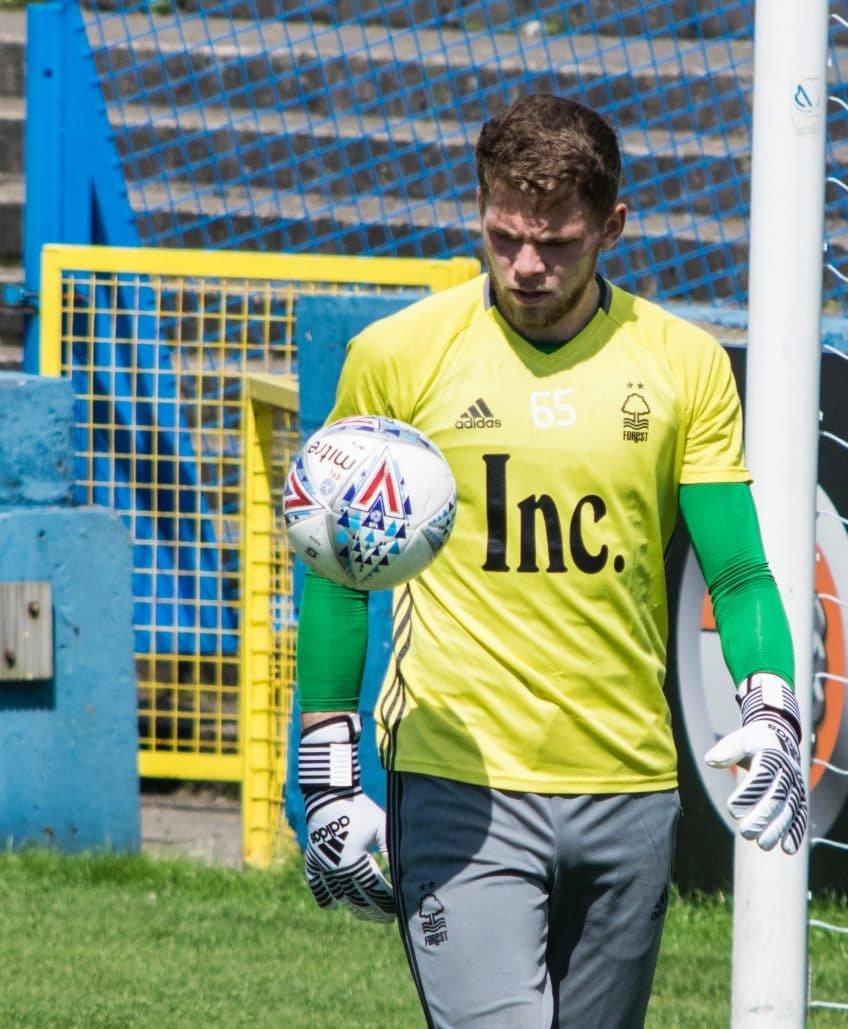
A Football academy provide a unique opportunity for young athletes to hone their skills and achieve their dreams of becoming professional footballers.
These academies offer a structured environment that combines rigorous training, education, and development opportunities that help young players reach their full potential.
In this article, we will discuss the typical training regime of a football academy.
The Elite Player Performance Plan (EPPP) is a long-term strategy with the aim of developing more and better homegrown players.
Technical Skills:
Technical skills are the foundation of football and are an essential component of any football academy training program.
These skills include ball control, dribbling, passing, shooting, and tackling.
Football academies provide specialized coaching to help players develop these skills and apply them in game situations.
Tactical Skills:
Tactical skills are the ability to understand and execute team strategies, formations, and game plans.
Football academies provide players with the knowledge and skills necessary to play various positions on the field and adapt to different game situations.
Players learn to communicate effectively with their teammates, understand their roles, and make quick decisions on the field.
Physical Fitness:
Football requires a high level of physical fitness, and football academies focus on developing this aspect of a player’s game.
Players undergo intense physical training that includes strength training, agility drills, and cardiovascular exercises to improve their endurance and speed.
Bleep test:
Every six weeks you have a physical test ability using a system called sparQ. SPARQ is an acronym for Speed, Power, Agility, Reaction and Quickness.
The SPARQ Rating is a scoring system designed to measure sport-specific athleticism. The tests include endurance, acceleration, jumping and flexibility tests. The test is a pointer to your level of improvement since your last test.
Furthermore, it will create a scientific analysis for you as a player.
To aspire to become a professional footballer, you need to train, train and train some more. In fact, it is essential that you train like you play and play as you train.
Hard work will always overcome natural talent when natural talent does not work hard enough – Alex Ferguson
A great tip for you as an academy footballer is to always give 100% in everything you do.
You never know who is watching disguised as a parent or fan. For all you know they could be a premiership manager, an important scout or a coach.

Mental Fitness:
Football is a mentally demanding sport that requires players to be focused and disciplined.
Football academies provide players with the necessary mental skills to cope with pressure situations and perform at their best.
Players learn techniques such as visualization, positive self-talk, and goal-setting to enhance their mental fitness.
Nutrition:
Nutrition is an essential component of any athlete’s training program, and football academies pay particular attention to this aspect.
Players are provided with a healthy and balanced diet that includes plenty of protein, complex carbohydrates, and healthy fats.
They also learn about the importance of hydration and the role of supplements in their diet.
Academic Education:
Players attend school and receive tutoring if needed to maintain their academic standards while pursuing their football dreams.
Academy Development Centres
Academy development centres provide a great opportunity for aspiring footballers to experience what it would be like to train and play at a professional academy.
These centres act as assessment grounds for players seeking an opportunity to trial with the main academy team.
Typically catering to children between the ages of 8-16, player development centres offer more advanced coaching with a focus on both technical and tactical skills, regardless of the player’s experience or ability level.
These centres are usually satellite grounds run by professional clubs, although private clubs may also create similar environments.
The development centres offer children the opportunity to train bi-weekly without charge, helping them develop technically, tactically, psychologically, and socially.
Players are coached by FA and UEFA qualified coaches, and they are able to continue to play for Grassroots Football team whilst training with the development centre.
The games played are in various formats, including 5v5, 7v7, 9v9, and Futsal.
For the few players who make the grade, they are integrated into the main academy squad for their respective age group.
Professional clubs aim to identify and recruit young talent through their extensive scouting networks.
An example will be the programme run by West Brom Albion (WBA)
Match preparation
Preparing for a football match requires a lot more than just turning up on the day and hoping for the best.
The academies have a football training plan.
In football academies, match preparation begins a day earlier with Saturday training sessions that focus specifically on the upcoming game.
The training is adapted to the formation of the opposition, and coaches often review videos to analyse the opposition’s tactics.
Sometimes, to simulate a physical opposition team, the training may require playing against an older age group.
To increase coach-player time, some players are requested to take a day off school for more intense training. This is called a “day release,” and it’s only extended to academy players showing great potential of progressing through to becoming a “scholar.”
A contract given by clubs to players to embark on an apprenticeship programme. Some Category 1 clubs even offer sleepovers for some of their players.
Free football training kit is provided to all the academy players across all the age groups. In some category 1 clubs they also provide astro and moulded boots.
Indoor football training takes place in specially built sports facilities to accommodate games and training mainly for the pre-academy and the under 9 – under 11 age groups
Personal Commitment:
While the academy provides the foundation for a young footballer’s career, the most critical part of becoming a professional footballer is the extra work put in outside of the academy’s training regime.
It’s this extra work that sets apart the exceptional players from the rest of the pack and could make all the difference in their career.
There are numerous options for external training, including futsal, one-to-one football coaching, conditioning training, athletics, yoga, and more.
Futsal, for instance, is a variant of football played on a smaller court with a smaller, heavier ball. It’s an excellent way to develop technical skills, particularly ball control and quick decision-making.
One-to-one coaching is also a valuable option for players who need personalized attention to hone specific skills.
Condition training and athletics can help players develop their physical attributes, such as speed, strength, and endurance. Yoga is also an excellent option for players looking to improve their flexibility and mental clarity.
Time Commitment to Academy Football
The time commitment for academy football can vary depending on the specific academy, age group, and level of competition.
Generally, players can expect to train several times a week, with additional matches on weekends.
This can amount to anywhere from 8 to 15 hours per week of training and matches, sometimes more during intensive periods like summer tournaments. Additionally, players may have fitness sessions, video analysis, and other activities as part of their development program.
It’s important for young players and their families to understand and be prepared for the time commitment required for academy football.

Academy Expectations From Player
Attend the football academy regularly and give notice of and reasons for any absence.
Attend school regularly and complete school assignments with the same commitment as at the academy.
Follow a lifestyle appropriate to development to include: eat, drink, relax and sleep sensibly.
Conduct behaviour with self-discipline and listen carefully to academy staff.
Always respect your opponents, team mates, referees and spectators.
Play all games to win, fairly and abiding to the laws of the game. Defeat must be accepted with dignity.
Academy Playing Formats:
Academy playing formats differ depending on the age group and club capacity, with three different levels available to players.
The Foundation Phase:
For players aged U9 to U11, involves games played on Sunday mornings against other academy teams. Matches are played at either the home ground or the opposition’s ground, with football festivals arranged at least twice a year.
The fitness level of individual players usually determines their match time, with a minimum expectation of 50% playing time over the season. Category 1 and Category 2 Academies participate in a regional indoor season during January and February.
Foundation Phase Guidelines

Youth Development Phase:
Players in the Youth Development Phase, aged U12 to U16, usually play games on weekends in a home and away format.
Matches are typically held at the training grounds and rarely at the football club’s main stadium.
Regular festivals are also included in the season’s calendar. Academy teams located in a regional area tend to play each other, while Category 1 and Category 2 Academies may participate in national and international tournaments.
This phase introduces players to tournament football.
The Youth Development Phase

The Professional Development Phase:
The Professional Development Phase, for players aged U17 to U21, is the stage where academy players who have demonstrated the potential to become professional footballers are prepared for the next level.
There are two formal leagues designed for the U18 and the U21. For the U21 games matches are played are played in a stadium or the club’s training ground.
The Under 18 Premier League is made up of academy teams classified as Category 1 clubs. They tend to be premiership formed academy teams. Under 18 Professional Development League is designed for teams that are in Category 2 and are normally Championship teams and below.
Professional Development Phase Guidelines

Football Academy Success Stories
While the chances of becoming a professional footballer are often cited as only 1%, many academy graduates do succeed in breaking into first teams.
The crucial factor is developing the necessary skills and abilities to secure a permanent place in the team.
In April 2024, Ethan Wheatley at just 18 years old became the 250th Manchester United academy player to make his debut in the first team.
England Youth Internationals Share Insights on Their Academy Journey
I have been at Tottenham since the start. After being scouted at a Sunday league tournament, when I was around 5. I was in the development at Spurs then move into the elite development at around 8 and signed at U11s – Malachi Hardy.
My dad created a side called The Junior Rangers. We did well, won multiple trophies and I started to get attention. I signed with Spurs when I was 9, played as a centre-back but got released as an U12.
I then signed for Charlton and played with them during the U13-U14, flourishing as a striker. After a trial, I signed with Chelsea and since then everything has been going in the right direction. – Chizaram Ezenwata
I was scouted as an U15 by Rochdale from my grassroots team, Churchtown and Burscough when we played them as a friendly. I then signed with Blackburn as an U16 and been with them since. – Igor Tyjon
I was scouted by Alan Clark who brought me to Middlesbrough at 8 and signed after two weeks at their development centre. I’ve been there ever since. – Anton Palmer
I started off playing in any position, but there was a tournament, during which our keeper got injured so I went in goal. I save a penalty in the final and been in goal since.
Seven teams scouted me, but I chose Arsenal. Martin Tyler was the scout that found me. Last summer, I moved to Villa. – Owen Asemota
It’s uncommon for players to join an academy at 19 years old, but goalkeeper Joel Halliday is an exception.
After playing Sunday League football until he was 16, he spent three years in a non-league college program with Basingstoke.
Following a successful trial, Joel has now been signed by QPR.